
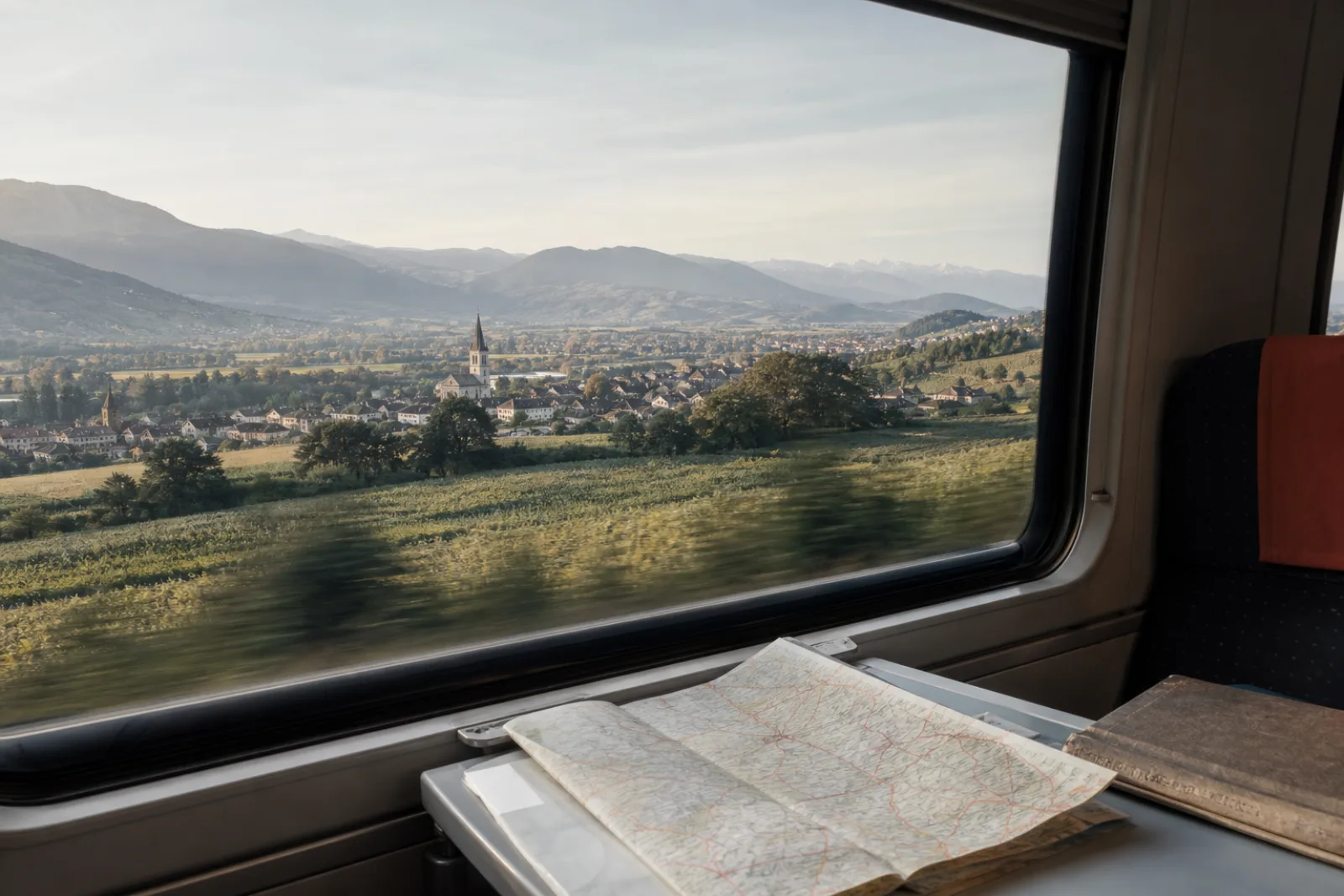
A journey is often described through its stops: the city where it begins, the village where lunch is planned, the landscape waiting at the end. Yet the character of a trip is shaped just as strongly by what happens between those points.
Connections create the rhythm
A short transfer can protect an unhurried afternoon. A direct train can make two very different regions feel like chapters of the same story. An awkward early departure can do the opposite, taking energy away from both places.
Good route planning considers more than distance. It looks at where a station sits, how often a service runs, what happens after arrival, and whether the view from the window adds something meaningful.
Travel time is still travel
Hours spent moving do not need to be empty. Regional railways reveal gradual changes in architecture, agriculture, language, and light. A ferry gives a coastline scale. Even a road transfer can make sense when it follows the geography rather than fighting it.
Choose continuity over quantity
The strongest itinerary is rarely the one with the most names. It is the one where each place prepares you for the next. Before adding another stop, ask whether the connection strengthens the route or simply lengthens the list.
Explore our approach to European travel experiences, or tell us about the journey you have in mind.